
Sentiment Analysis is a Natural Language Processing (NLP) technique used to understand how people feel about topics, brands, events, or public figures by analyzing textual content. It allows organizations to measure whether opinions expressed in news articles, social media posts, reviews, or discussions are positive, negative, or neutral, and in more advanced cases, to capture emotions such as approval, dissatisfaction, enthusiasm, or outrage.
For brands, media companies, and political institutions, sentiment analysis is not just about processing text, but about monitoring public perception and reactions at scale. While data collection is only the starting point, the real value lies in how sentiment is calculated, contextualized, and interpreted to support strategic decisions, reputation management, audience engagement, and communication strategies. For this reason, this article focuses primarily on the analysis and interpretation phases, where raw opinions are transformed into meaningful insights.
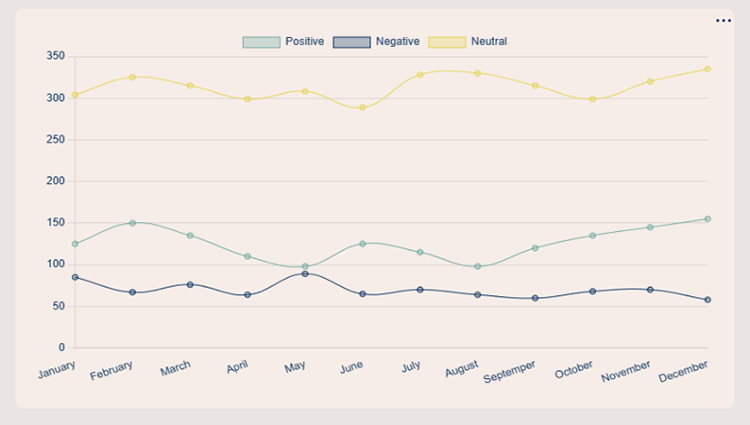
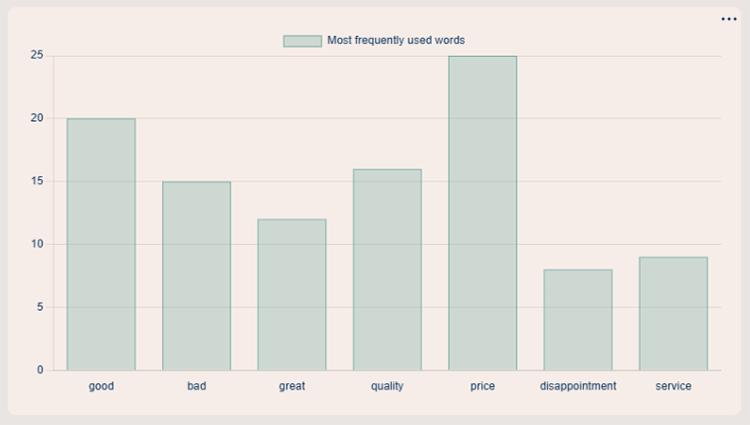
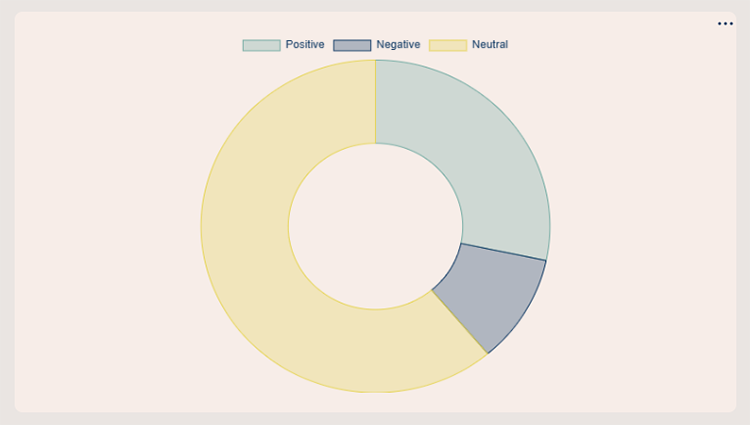
The example dashboards are provided by the Gyule app.
To create a Gyule account, you can sign up here: www.gyule.io
Steps to Perform Sentiment Analysis
Here is a typical workflow for performing sentiment analysis:
1. Collect the Data
Gather text data from sources such as:
- Reviews
- Social media
- Emails
- Surveys
- Chat logs
Which type of data do you want to analyze? Some data is easier to collect thanks to APIs, while other data is more difficult to obtain and requires a specific retrieval strategy.
2. Choose a Model or Tool and Process the Data
Once we have collected all the data, we need to process it. How? We can select different techniques. Here, we consider three main approaches::
– Open source libraries
– Machine learning frameworks
– Third-party APIs
What is the difference?
Open source libraries: we use open source libraries to process our data. The system is already functional and does not require model training. Once implemented, we can analyze sentences to determine whether their tone is positive, negative, or neutral.
Pros: low costs, quick to implement
Cons: lower performance
Machine learning frameworks: Machine learning frameworks: we can use machine learning frameworks (TensorFlow, PyTorch) and train our own models. The model learns patterns from the data and applies them to new, unseen texts.
Pros: More accurate than rule-based systems, adapts better to context
Cons: Requires a labeled dataset, needs training and tuning, it takes time to implement
Third-party APIs: ready-to-use APIs are cloud-based artificial intelligence services that allow developers and organizations to perform sentiment analysis without building or training models from scratch. These services provide pre-trained models that can be integrated directly into applications through simple API calls.
Pros: Rapid implementation with minimal technical setup, High scalability
Cons: High cost if you have multiple large datasets to analyze, Privacy: your data will be sent to third-party servers
3. Analyze the Sentiment
Once you have chosen the correct model or tool, you can analyze the sentiment.
You can split the data into different categories (or cohorts), the most simple: positive / negative / neutral.
By doing a more in-depth work you can associate the sentiment with the reason. For example, you can associate positive, negative, or neutral sentiment with price, services, or any other aspect you want to analyze.
It is also important, when possible, to consider the confidence score or probability of the results.
4. Interpret the Results
To interpret the results in the correct way, you have to be clear which are your goals. What do you want to understand from this analysis?.
With sentiment analysis, you can:
- Identify trends
- Compare sentiment over time
- Support decision-making
To visualize the results, you can use different charts and diagrams, such as pie charts or doughnut charts to view positive / negative / neutral.
You can also use a line chart to see how the three values change over time, or a bubble chart to visualize the most frequently used words.
Conclusion
Sentiment Analysis is a powerful tool for understanding opinions and emotions hidden in text data. From simple rule-based systems to advanced AI models, there are many ways to approach it depending on your needs and resources.
When applied correctly, sentiment analysis can provide valuable insights, improve decision-making, and help organizations better understand their audience.
Leave a Reply